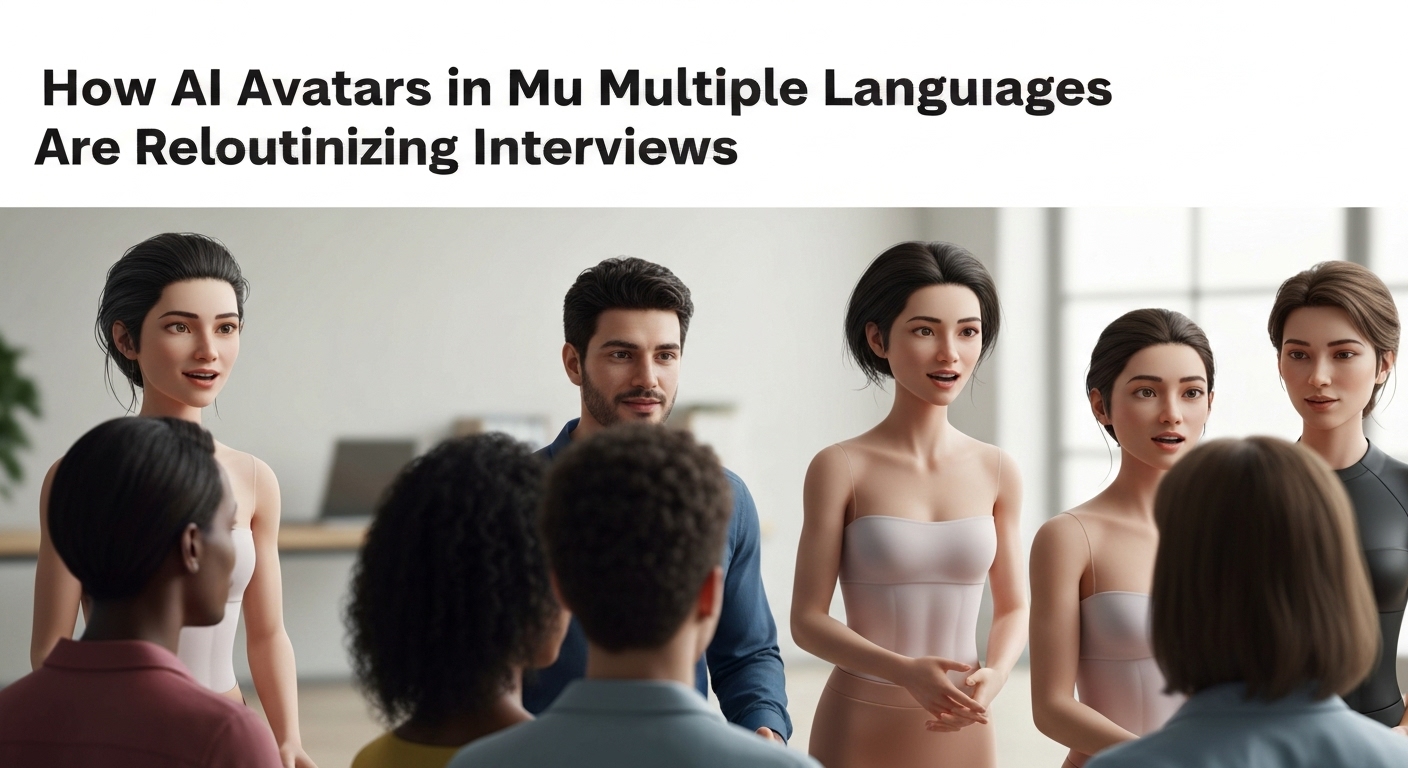
How AI Avatars in Multiple Languages are Revolutionizing Interviews
Introduction
In today’s global job market, connecting with diverse candidates across languages and cultures is essential. The introduction of AI avatars capable of conducting interviews in multiple languages is transforming how recruiters engage talent worldwide. This innovative technology is removing language barriers and elevating the recruitment process.
The Growing Importance of Multilingual AI Avatars in Hiring
With businesses expanding across borders, recruitment teams often face the challenge of interviewing candidates who speak different languages. Traditional methods rely on bilingual recruiters or translation services, which can introduce delays and bias. AI avatars powered by advanced natural language processing can seamlessly conduct interviews in a wide array of languages, enabling comprehensive and culturally sensitive candidate evaluations.
Recent research indicates that companies embracing multilingual AI interviewing tools have witnessed a 30% increase in candidate engagement rates and considerably shorter time-to-hire, according to HR tech analysis from late last year.
How AI Avatars Work in Multiple Languages
AI avatars use sophisticated speech recognition, language translation, and sentiment analysis to interact naturally with candidates. Here's how they function in multilingual interview settings:
- Dynamic Language Detection: AI avatars identify the candidate’s preferred language automatically or via initial selection.
- Natural Conversation Flow: Using natural language understanding, they ask relevant questions and respond contextually.
- Cultural Nuance Adaptation: They adjust phrasing and tone to match cultural contexts, making candidates comfortable.
- Real-Time Translation and Transcription: Interviews are translated and transcribed instantly for recruiter review, maintaining accuracy.
This seamless interaction promotes fairness by standardizing how candidates are assessed regardless of language.
Real-World Benefits for Recruiters and Candidates
AI avatars proficient in multiple languages bring measurable advantages:
- Wider Talent Pools: Companies can tap into global markets, interviewing top talent without language restrictions.
- Efficiency and Consistency: Automated interviews reduce administrative burden and deliver uniform candidate assessments.
- Enhanced Candidate Experience: Candidates feel more at ease and valued when interviewed in their native language.
- Bias Reduction: AI interviewing minimizes unconscious bias related to language proficiency or accent.
For example, global companies have integrated advanced AI interview platforms like NTRVSTA.com to unlock these benefits. NTRVSTA.com's technology supports dozens of languages and dialects, empowering recruiters to connect authentically with candidates anywhere.
Future Trends in AI-Powered Multilingual Interviewing
As AI evolves, the capabilities of multilingual avatars are expected to grow, including:
- Voice and Emotional Recognition: Improving empathy and candidate rapport.
- Expanded Language Support: Incorporating less commonly spoken languages to foster inclusivity.
- Deeper Cultural Intelligence: More nuanced interview approaches tailored to cultural expectations.
- Integration with Recruitment Analytics: Offering deeper insights into candidate performance across languages.
Platforms like NTRVSTA.com are at the forefront of these innovations, continuously enhancing AI interviewer capabilities to meet global recruitment needs.
Conclusion
AI avatars capable of conducting interviews in multiple languages represent a breakthrough in creating equitable, efficient, and engaging recruitment processes. Organizations leveraging advanced AI interview platforms such as NTRVSTA.com are setting new standards in talent acquisition by embracing linguistic diversity and technological excellence.
Recruiters seeking to elevate their hiring strategies should explore how AI avatars supporting multiple languages can transform candidate interactions and accelerate recruitment success. This is the future of interviewing made accessible today.